Navigating ongoing ownership costs is essential for any real estate transaction, and evaluating Sobha villa service charges is a crucial step for both end-users and international investors. Whether considering master-planned forest living at Sobha Elwood in Dubailand, serene acreage at Sobha Sanctuary in Al Yufrah, waterfront luxury at Sobha Siniya Island in Umm Al Quwain, or prime estates at Sobha City in Al Bahiya, Abu Dhabi, understanding recurring maintenance fees safeguards your projected return on investment.
Understanding Sobha Villa Service Charges Across the UAE
Service charges in the United Arab Emirates cover the upkeep, security, management, and long-term capital maintenance of common areas within a residential development. In Dubai, these fees are regulated by the Real Estate Regulatory Agency (RERA), an arm of the Dubai Land Department (DLD), via the electronic Mollak system. Mollak ensures that all community service fees are audited, transparent, and indexed against official benchmarks.
For villa developments, service fees are typically calculated on a per-square-foot basis annually, assessed either against the built-up area (BUA) or the total plot area depending on community zoning regulations. When buying into master developments such as Sobha Elwood or Sobha Sanctuary, these charges cover vital community utilities, perimeter security, road network upkeep, waste management, and the maintenance of shared recreational zones.
In Abu Dhabi, the Department of Municipalities and Transport (DMT) governs common-property management fees for developments like Sobha City in Al Bahiya, providing clear regulatory oversight. Similarly, coastal communities like Sobha Siniya Island in Umm Al Quwain follow emirate-level municipal guidelines designed to ensure environmental sustainability and pristine public domain upkeep without unpredictable fee escalation.
What Influences Recurring Villa Maintenance Fees
Villas generally exhibit different service fee structures than high-rise apartment towers. Because individual villa owners are directly responsible for the maintenance of their private interior spaces, private gardens, and private pools, the shared service charge predominantly finances communal assets. Several core factors influence these annual figures across Sobha master developments:
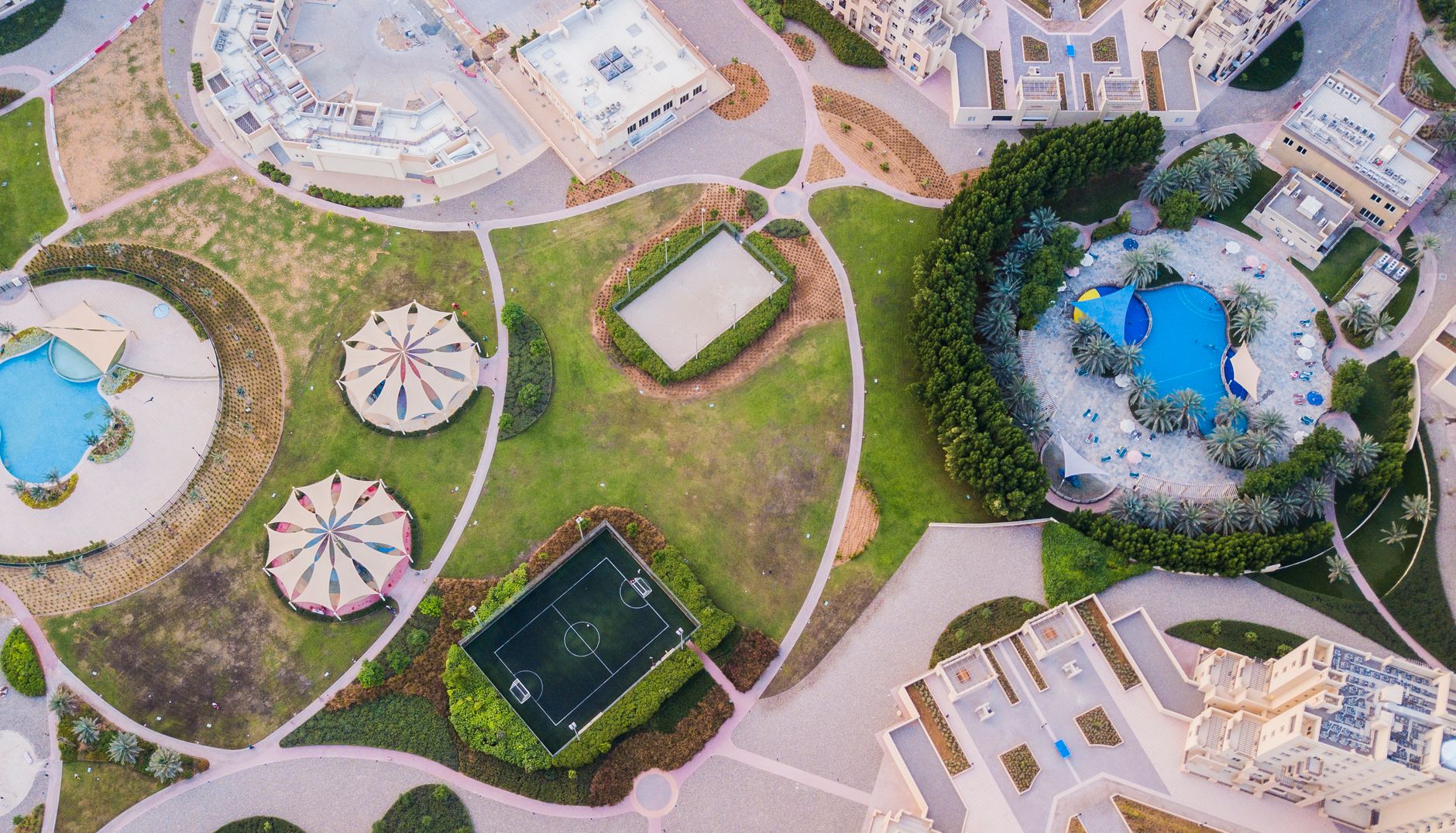
- Extensive Greenery and Water Amenities: Developments like Sobha Elwood and Sobha Sanctuary emphasize expansive woodland landscapes, botanical walking paths, and curated water features. Managing specialized irrigation and continuous landscape care forms a visible portion of community operational expenses.
- Waterfront and Coastal Infrastructure: Island living at Sobha Siniya Island incorporates marine promenades, coastal protection, and mangrove-adjacent common spaces, which necessitate specialized maritime preservation protocols.
- Security and Access Control: Fully gated private communities with round-the-clock physical patrols, automated surveillance, and visitor management systems involve ongoing operational staffing.
- The Sinking Fund: Regulatory frameworks across Dubai and Abu Dhabi require a dedicated reserve fund allocation. This sinking fund ensures capital is preserved for future infrastructure repairs, preventing sudden one-off levies on owners down the road.
Backward Integration and Long-Term Cost Efficiency
One structural advantage for buyers of Sobha properties is the developer’s backward-integrated construction model. Unlike standard developers who outsource design, engineering, materials, and joinery to third-party contractors, Sobha oversees architecture, manufacturing, and structural execution entirely in-house.
High-quality initial construction directly correlates with lower operational repair bills. Premium MEP (mechanical, electrical, and plumbing) fittings and durable external cladding reduce common-property degradation over time, shielding property owners from runaway maintenance assessments.
This structural resilience plays an essential role in preserving net rental yields. Investors targeting the UAE Golden Visa through the qualifying AED 2,000,000 property investment route must monitor operating costs closely to ensure that gross rental returns translate cleanly into sustainable net annual yields.
Net Yields and Investment Due Diligence
When modeling cash flow for a luxury villa purchase in 2026, prudent investors separate gross yields from net income. Service charges represent the single largest predictable deduction from rental receipts.
- Calculate Realized Net Income: Subtract annual service charges, property management percentages, and municipal registration costs from your projected annual lease income to establish your accurate cash-on-cash yield.
- Verify Official Index Filings: In Dubai, consult the DLD Mollak Service Charge Index to view historic approved fees for neighboring communities within Dubailand, providing realistic operational baselines.
- Review Developer Documentation: Request anticipated operational budget breakdowns during the reservation phase to understand what is covered under baseline common charges versus optional private villa maintenance contracts.
To obtain current guidance on service fee structures, community handbooks, and purchasing pathways across Sobha Elwood, Sobha Sanctuary, Sobha Siniya Island, and Sobha City, consult directly with Infinity Realtor for verified documentation.
Exploring Sobha residences next? Review Sobha residences across the UAE, browse all featured Sobha projects, or enquire with our team for pricing and availability.